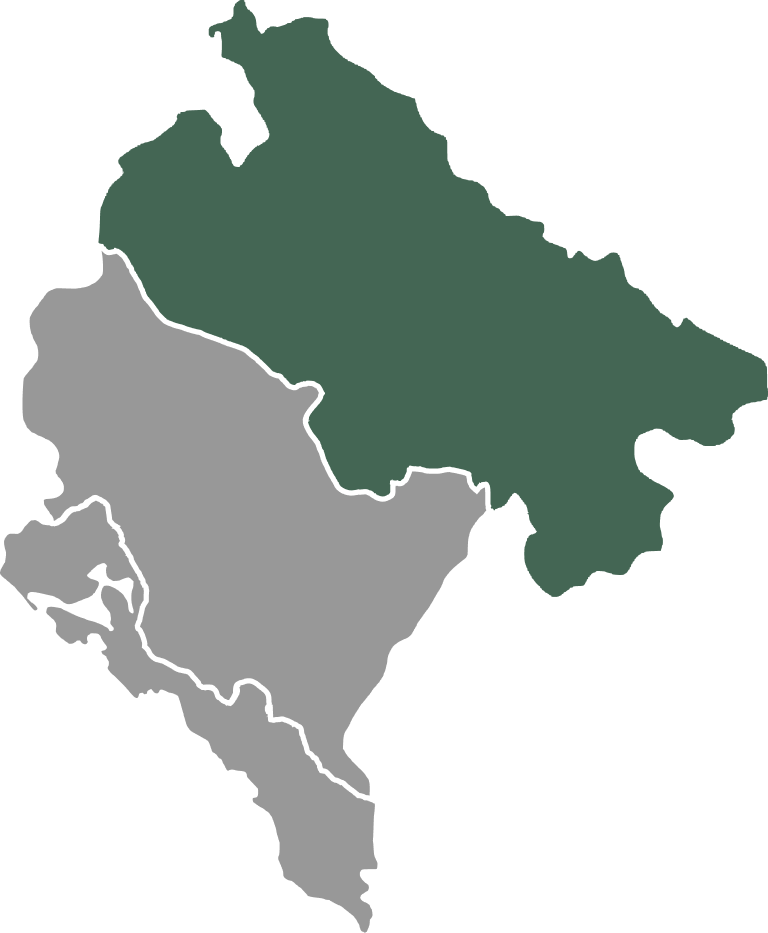
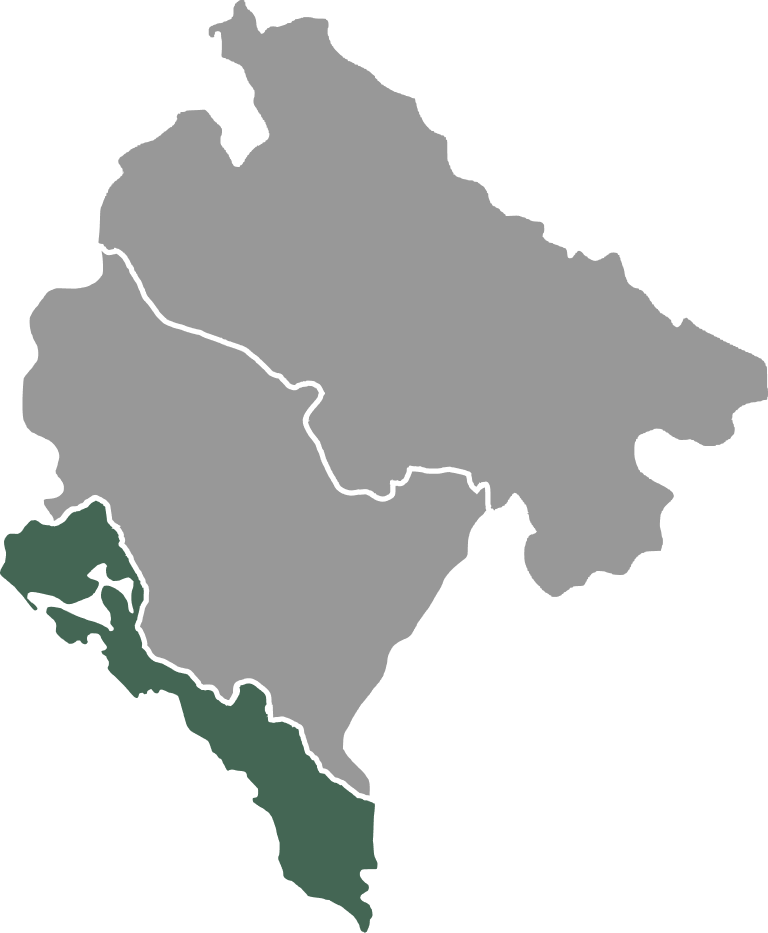
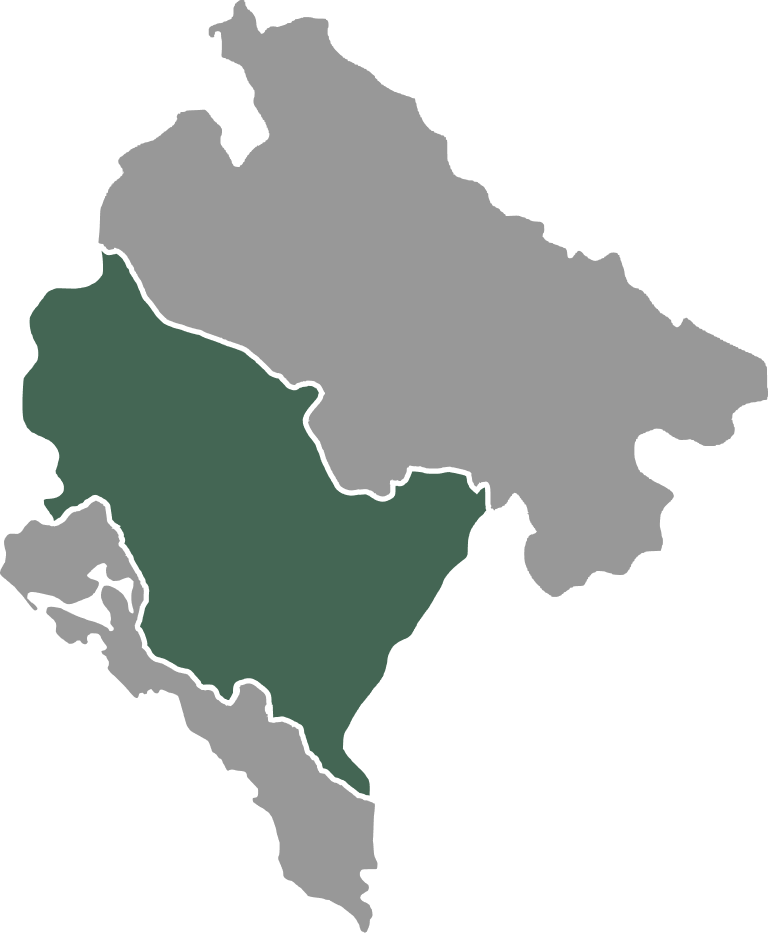
The northern region of Montenegro covers the largest share of the country’s territory and stands in the sharpest contrast to the southern coast and the central plain. From Pljevlja at the far north, through Bijelo Polje, Mojkovac, and Kolašin, all the way to Berane, Andrijevica, Rožaje, Plav, Gusinje, Petnjica, Šavnik, Plužine, and Žabljak, the entire region feels like a mosaic of separate mountain worlds, bound together by a common thread: a strong character and a deeply rooted tradition.
Northern Montenegro is not merely a geographical term. It is an entire world of its own, profoundly different from the rest of the country, a place where mountains rise like walls of stone, where ancient forests billow in the wind like the sea, and where rivers cut through the land with such force that they leave behind canyons that seem carved by the hands of giants.
The north is shaped by the massifs of Durmitor, Prokletije, Bjelasica, Sinjajevina, Komovi, Ljubišnja, and Hajla. The rivers Tara, Lim, Ćehotina, and Piva cut through the terrain in deep canyons. The Tara, home to Europe’s deepest canyon, together with Lake Piva, gives the region a singular natural drama. The vast plateaus of Sinjajevina, Krnovo, and the Piva mountain range captivate with their openness, while the primeval forest of Biogradska Gora is among the last of its kind in Europe. Lakes such as Black Lake, Biograd Lake, Plav Lake, Hridsko Lake, and Zminje Lake are enduring symbols of the north.
In this landscape, the day moves to a different rhythm: dawn lingers longer, mornings are fresher, the days feel clearer, and at night the stars shine with such intensity that they seem closer than anywhere else.
The north is home to a diverse population. In most towns live Montenegrins, Serbs, and Bosniaks, while in Plav, Gusinje, and Petnjica Bosniak and Albanian communities predominate. Tradition is deeply woven into everyday life. Family values, the preservation of custom, hospitality, and a strong bond with the land are the essential elements of local identity. Many areas preserve distinctive customs, songs, instruments, and village rituals passed down through generations.
The people of the north carry within them a rare blend of endurance, warmth, and stubborn resolve, the qualities of those shaped by long winters, harsh conditions, and life within close-knit communities.
Every place has its own rhythm, its own accent, its own story, yet everywhere one senses the same essence: a traditional culture that honours heritage, respects the host, cherishes custom, and celebrates the guest.
Here, a person’s word here is as binding as a handshake. Family gatherings, Bayrams, patron saint celebrations, village festivals, and mountain fairs are not merely events, but pillars of identity.
For centuries, this region has relied on what the land and the forest provide. Livestock farming is as old as the highland summer pastures themselves. Cheese, kaymak, cured meat, honey, plateau potatoes, and trout from crystal-clear waters together form the gastronomic wealth of the region.
Timber processing, agriculture, mining, and crafts remain the backbone of the economy in many municipalities. Pljevlja bears the weight of Montenegro’s energy sector, the villages around Bijelo Polje are synonymous with fruit and honey, and the Plav area with fish and dairy products. In Berane, Bijelo Polje, Mojkovac, and Kolašin, timber processing and the food industry continue to develop. In Plužine, fishing and the resources of Lake Piva play an important role. Tourism is the region’s fastest-growing sector, especially in Žabljak, Kolašin, Plav, Gusinje, and Mojkovac. Ski centres, national parks, and adventure tourism have been increasing the economic value of the north year after year.
The cultural life of the north preserves the spirit of the old Balkans. Events such as Ratković Poetry Evenings in Bijelo Polje, the Days of Vasojevići in Andrijevica, Blueberry Days in Kolašin, the Prokletije Trail in Plav, and numerous village gatherings reflect the region’s singular character. There are also gusle players who still remember epic verses, storytellers from Bihor, Durmitor legends of wolves and mountain fairies, and the old sevdalinka songs of the Plav-Gusinje basin.
Monasteries such as Piva and Đurđevi Stupovi, mosques from the Ottoman era, old villages with wooden roofs, and cold roadside springs all form part of a cultural map that cannot be explained in numbers, only experienced.
The north offers the greatest concentration of protected areas in Montenegro. Durmitor National Park draws hikers, climbers, and lovers of alpine lakes. Biogradska Gora enchants with its primeval forest and lakes. Prokletije is a world-class destination for high-mountain tourism. The Tara is a prestigious rafting destination. Bjelasica offers gentle trails, scenic viewpoints, and ski facilities. Komovi and Sinjajevina are ideal for long hikes and the sheer freedom of movement. Plav Lake and Hridsko Lake feel like places where time has stood still.
The region abounds in viewpoints, mountain pastures, and villages that preserve authentic architecture. In every direction, a new landscape opens up, a new scent, a new cold spring, a new path.
The north connects Montenegro with Serbia, Kosovo, and Bosnia and Herzegovina.
It is linked with central Montenegro by major road routes, while the Bar to Bijelo Polje railway passes through Kolašin, Mojkovac, and Bijelo Polje and remains an important transport connection between this region and the rest of the country. The priority section of the Bar-Boljare motorway, Smokovac-Mateševo, was completed and opened to traffic in July 2022, and a further step in connecting the north was made on 27 February 2026, when the contract was signed for the design and construction of the Mateševo-Andrijevica section. The accessibility of the northern region can therefore no longer be seen merely as a development plan, but as a concrete infrastructural process already reshaping its connection with Podgorica and central Montenegro.
In the north, sport is not a luxury but a way of life. Snow sports, hiking, cycling, climbing, trail running, rafting, fishing, and caving are all part of the region’s identity. Every town has sports clubs, and many have halls and playing fields, yet the greatest arena of all is nature itself.
Today, the north is one of Montenegro’s most promising regions for investment, rich in resources and largely untapped space. Investments in tourism, hotels, ethno-villages, ski centres, camping zones, processing industries, organic farms, logistics, and energy projects all hold strong potential. Land and property prices are more favourable than in the south, attracting both domestic and foreign investors. The construction of the motorway, the presence of national parks, incentives for livestock farming, and growing tourism demand all further increase the value of investment.
The north offers authenticity, peace, adventure, and a culture found only in the mountainous heart of Montenegro.
Here, calm and wildness, modesty and strength, rocky peaks and soft mountain valleys meet each day. Clear lakes, primeval forests, mountain summits, canyons, and rivers create scenes of lasting impact.
A visitor may experience an entirely different world: quiet villages on high plateaus, summer pastures beneath Komovi, boats on Lake Piva, the view from Bobotov Kuk, walks through the primeval forest of Biogradska Gora, cold springs in Plav and Gusinje, or the snowy slopes of Bjelasica.
Life moves more slowly here, in step with the seasons. People are close to one another, nature is always present, and tradition is firmly rooted. Winters are long, summers are fresh, and the landscape changes in cycles that shape everyday life. Mornings are full of light, nights are quiet, neighbours are near, and the rhythm of life is attuned to sun, rain, and snow.
The north offers something increasingly rare today: space, silence, authenticity, and endurance.
View listings in Northern