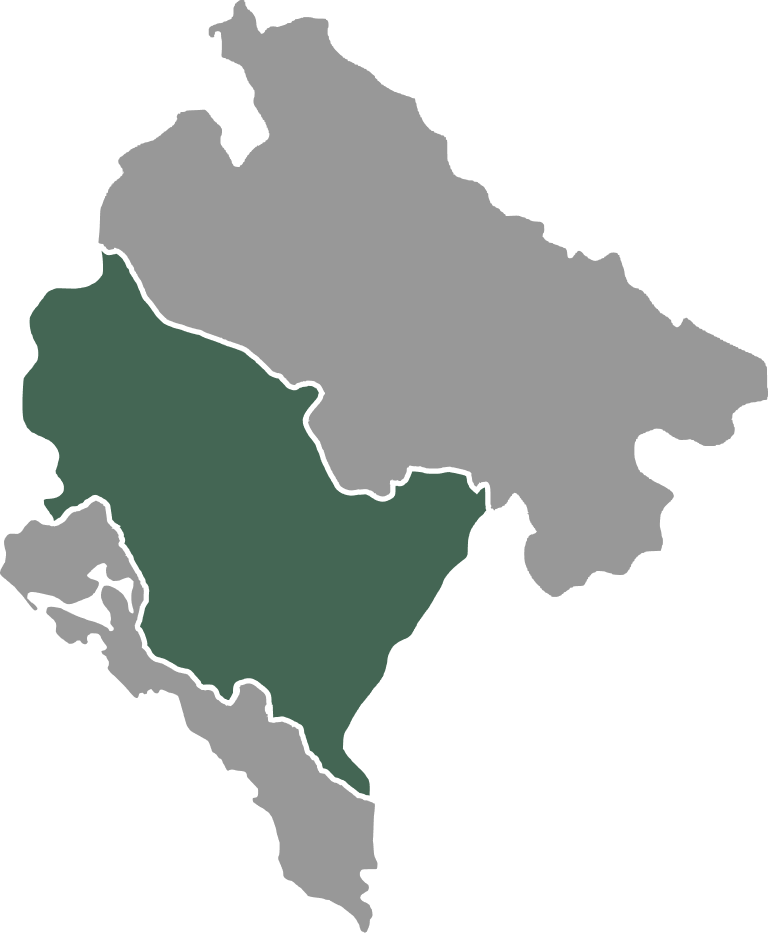
The Central Region is where Montenegro’s diversity is seen most clearly. At one end lies Cetinje, resting in a basin beneath Lovćen. At the other stretches the Zeta Plain, with rivers winding through fertile fields. Between them, Podgorica radiates its urban pulse, while Nikšić lies broad and open in its vast valley, surrounded by lakes and mountains. Danilovgrad, set within the green belt of the Bjelopavlići Plain, links all these points together, while Tuzi in the south guards the gateway to Albania and Lake Skadar.
This is a region that changes before your eyes throughout the year. In spring it is green and fragrant, in summer blazing and full of life, in autumn rich with harvest, and in winter calm and veiled in mist.
The Central Region feels as though it is made up of several different worlds. The Zeta and Bjelopavlići plains offer the most fertile land in Montenegro, their fields lined with greenhouses, vineyards, and gardens. Rising between them are the massifs of Lovćen, Maganik, and the hills surrounding Nikšić, while to the southeast the vast waters of Lake Skadar open up. The Morača, Zeta, and Cijevna rivers bring life and create natural oases. The Rijeka Crnojevića winds through lush scenery toward the lake, hiding old bridges and houses that seem frozen in time. The lakes of Nikšić, Krupac, Slano, and Vrtac, shimmer in summer and draw visitors for day trips, while Trebjesa is a perfect forest refuge right in the heart of the city.
Each of these landscapes tells a completely different story, yet all of them flow into one shared whole.
More than half of Montenegro’s population lives in the Central Region. Its towns each have a distinct character. Podgorica is modern, fast paced, and open. Nikšić is strong, working class, and culturally vibrant. Cetinje is intimate, historic, and symbolic. Danilovgrad is gentle and family oriented, Zeta fertile and closely tied to nature, while Tuzi is diverse, traditional, and a guardian of a strong local identity.
Montenegrins, Serbs, Albanians, Bosniaks, and other communities live here. The Central Region is a kind of mosaic of different cultures and paths that meet in everyday life. In Tuzi, several languages are spoken. In Zeta, old customs are carefully preserved. In Cetinje, the spirit of the old royal capital can still be felt. In Nikšić, humor, energy, and local stubbornness stand out. And in Podgorica, people from every corner of the country come together.
The economy of the Central Region is diverse. Podgorica is the epicenter of services, trade, technology, state institutions, and the modern economy. This is where decisions are made, where plans, laws, and investments take shape. Nikšić carries the weight of heavy industry, mining, energy, and manufacturing. Its industrial zone stretches toward the border with Bosnia and Herzegovina, while the brewery and many factories continue traditions that go back decades. Zeta and Tuzi feed the rest of the country, their fields producing vegetables, fruit, wine, grains, and everything the land can yield. Danilovgrad is steadily growing between the two major centers and is becoming the northern spatial extension of Podgorica. Cetinje relies on culture, institutions, public administration, and tourism.
Each of these municipalities has its own role, and together they form the backbone of Montenegro’s economy.
Podgorica is the country’s main center of education. Most faculties, institutes, research centers, and academic programs are located here. Cetinje, with its arts and cultural faculties, gives a special character to academic life. Nikšić, with its Faculty of Philology and strong secondary school network, contributes to the education of the entire north of the country. Zeta, Tuzi, and Danilovgrad have well organized primary and secondary schools that serve as the starting point for young people who later continue their studies in the capital.
Cetinje is the heart of Montenegrin history. Its museums, palaces, galleries, and archives preserve the soul of the state. Podgorica offers an urban cultural scene with theaters, cinema, festivals, music events, and art programs. Nikšić is known for high energy events such as Lake Fest and Bedem Fest. Tuzi and Zeta preserve a strong tradition of folklore, village celebrations, religious festivities, and agricultural fairs. Danilovgrad nurtures local culture, lively squares, music evenings, and gatherings that bring the town to life in summer.
The Central Region has an almost endless list of places for excursions. Lovćen, Ivanova Korita, Njeguši, and the Mausoleum are among the country’s proudest landmarks. Lake Skadar offers boat rides through reeds, birdwatching, hidden villages, and old stone houses. The Cijevna attracts swimmers and photographers with its unique color and beauty. Rijeka Crnojevića offers postcard worthy scenery. The Morača combines the force of a canyon with the calm of urban promenades. The Zeta is gentle, quiet, and ideal for fishing. The lakes of Nikšić are expansive and refreshing in summer. Trebjesa is peaceful, Cetinje rests in the shade of linden trees, and Danilovgrad is wrapped in the greenery of the plain.
Nearly all movement through the country passes through the Central Region. Podgorica has the airport, the country’s largest road junction, and its key railway station. Nikšić is well connected by a modernized railway line. Danilovgrad is a natural corridor between north and south. Zeta lies right beside the airport and the main highway route. Tuzi is the gateway to Albania. Cetinje connects the Central Region with the coast. Journeys are short, distances are small, and the entire system functions as one connected network.
The backbone of sport lies in Podgorica and Nikšić, but recreational opportunities are everywhere. The mountains are close, and the rivers even closer. People run, cycle, hike, swim in lakes, walk along riverbanks, and spend time outdoors all year round. Sports clubs, halls, pitches, and centers make the region active and full of life.
The Central Region is the most attractive area for investment in the country. Podgorica draws residential and commercial projects, the IT sector, logistics, and trade. Nikšić offers industrial space, workforce capacity, and strong market potential. Zeta is becoming a magnet for agro industry and distribution centers. Tuzi offers opportunities for the development of viticulture, greenhouse production, trade, and logistics. Danilovgrad is gaining value thanks to its strategic position between the two largest cities. Cetinje has great potential for cultural tourism, small hotels, artistic programs, and specialized gastronomic tourism.
This region strikes a balance between low land costs, solid infrastructure, strong demand, and steady growth.
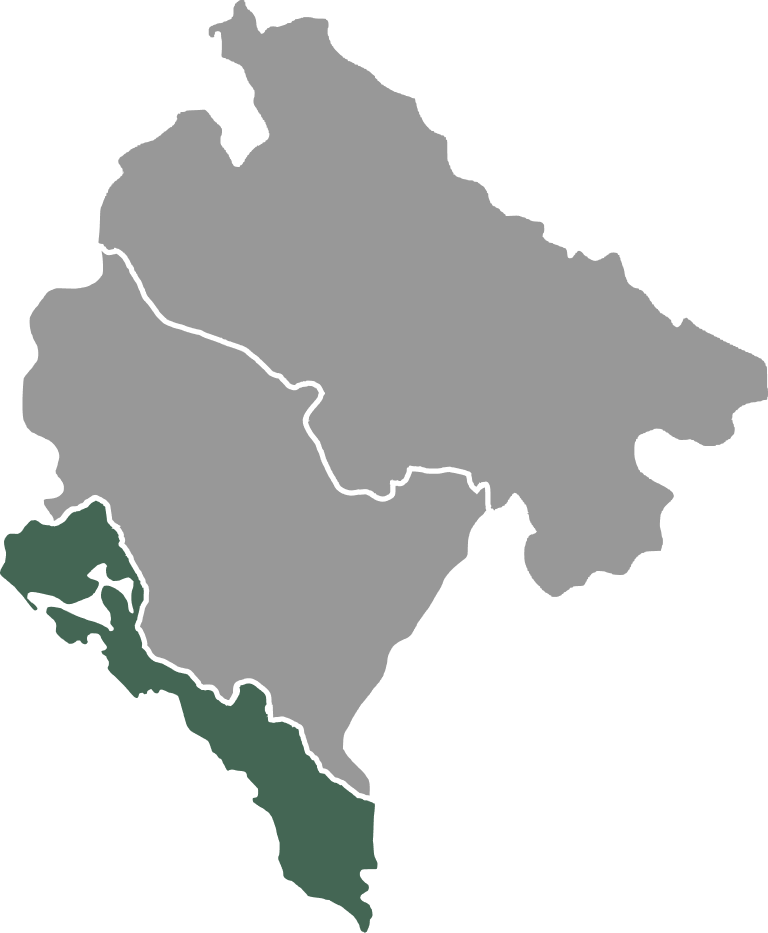
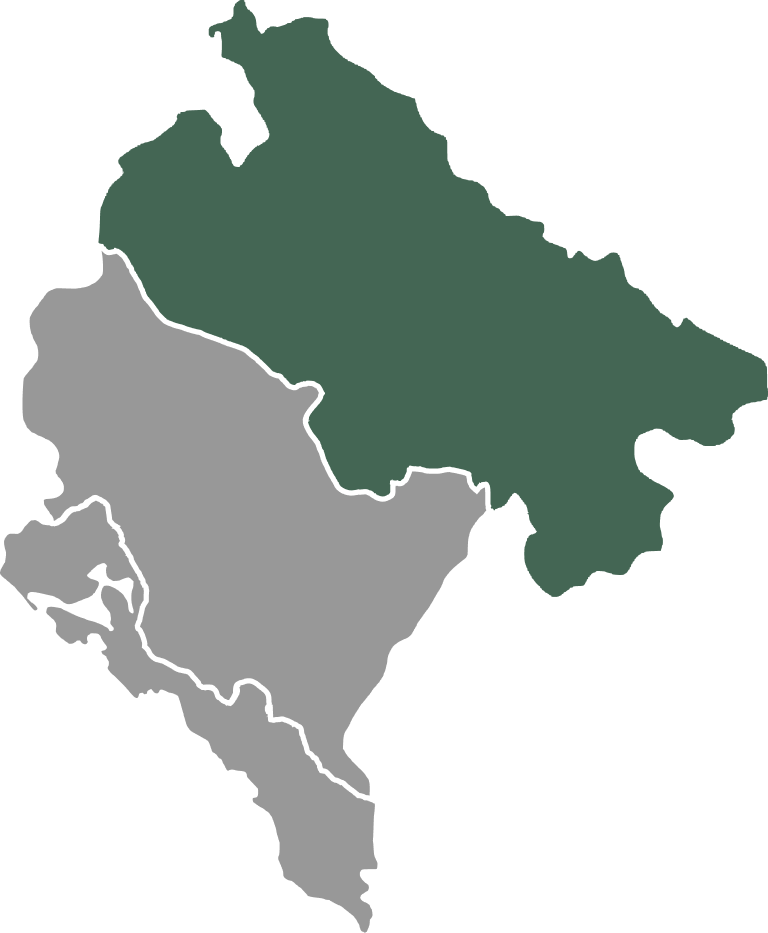
The Central Region brings together everything Montenegro has to offer, all within a small area. The sea is close, as are the mountains, lakes, and excursion spots, while the towns live life to the fullest. History, nature, culture, food, people, and tradition are woven together into a living mosaic that leaves a powerful impression.
Life here can be whatever you want it to be. In Podgorica, fast and modern. In Nikšić, steady and strong. In Danilovgrad, peaceful and family centered. In Zeta and Tuzi, rooted in the land, tradition, and nature. In Cetinje, dignified and steeped in historical feeling. The Central Region is a place where a person can have both urban rhythm and natural silence in the very same day. It is a space that lives expansively, dynamically, and with a full heart.
View listings in Central